Use this simple setup checklist to legally start and run a profitable cleaning business, including registration, licensing, pricing, insurance, and core business systems.
Starting a cleaning business is one of the lowest-barrier service businesses and can begin part-time or scale into commercial operations. This checklist breaks the startup process into manageable, logical steps so you avoid delays, wasted spending, or compliance mistakes.
✅ Choose Your Business Model
Cleaning businesses typically operate under one of three structures: residential-only, commercial-only, or mixed service models. Residential cleaners focus on homes, while commercial cleaners work on offices, retail, schools, and medical facilities.
Many beginners start with residential clients and later expand into commercial jobs. The model you choose will influence pricing strategy, supplies, time estimation, and future commercial contracts.
✅ Decide on Your Business Structure
Most cleaners begin as sole proprietors because it’s fast and simple. As the business grows, many convert to an LLC for liability protection and professional credibility.
LLC status is often preferred when bidding on business and property management jobs because companies value the separation between personal and business obligations. Understanding when to form an LLC supports long-term business sustainability.
✅ Register Your Business Name
Registering ensures you can legally operate and prevents others from using your business name. Name registration is handled at the state level, while local permits may be required separately.
Many businesses also register a DBA (Doing Business As) name when using a different brand name than their personal name. Name visibility and registration make it easier to open accounts and negotiate commercial contracts.
✅ Obtain a Local Business License
Most cities or counties require a business license to provide cleaning services. Fees are generally low, and approval times are short.
Licensing demonstrates legitimacy and reassures potential clients. Customers and commercial property managers often ask whether you are licensed before awarding large cleaning contracts.
✅ Register for State Sales Tax (If Applicable)
Sales tax rules vary by state. In many states, residential and commercial cleanings are treated as taxable services and require a sales tax account.
If your state requires this registration, you must submit sales tax during regular reporting periods. Understanding local tax rules helps protect profit margins.
✅ Get an EIN (Federal Employer Identification Number)
An EIN is required if you have employees or operate under an LLC. Even without employees, many banks require an EIN to open a business bank account.
Securing an EIN is mandatory when subcontractors are used or payroll is added later.
✅ Open a Business Bank Account
A separate business account prevents mixing personal and business expenses. This makes taxes easier and protects liability boundaries if you operate as an LLC.
Banks may require your EIN and registration documents to open the account. Separation simplifies financial tracking and improves bookkeeping.
✅ Obtain Insurance (Highly Recommended)
Liability insurance protects against accidental damage or injury claims. Many commercial clients require proof of insurance before signing contracts.
Insurance costs vary by location and coverage level. Residential cleaners often start with basic liability insurance and expand coverage as they pursue commercial contracts.
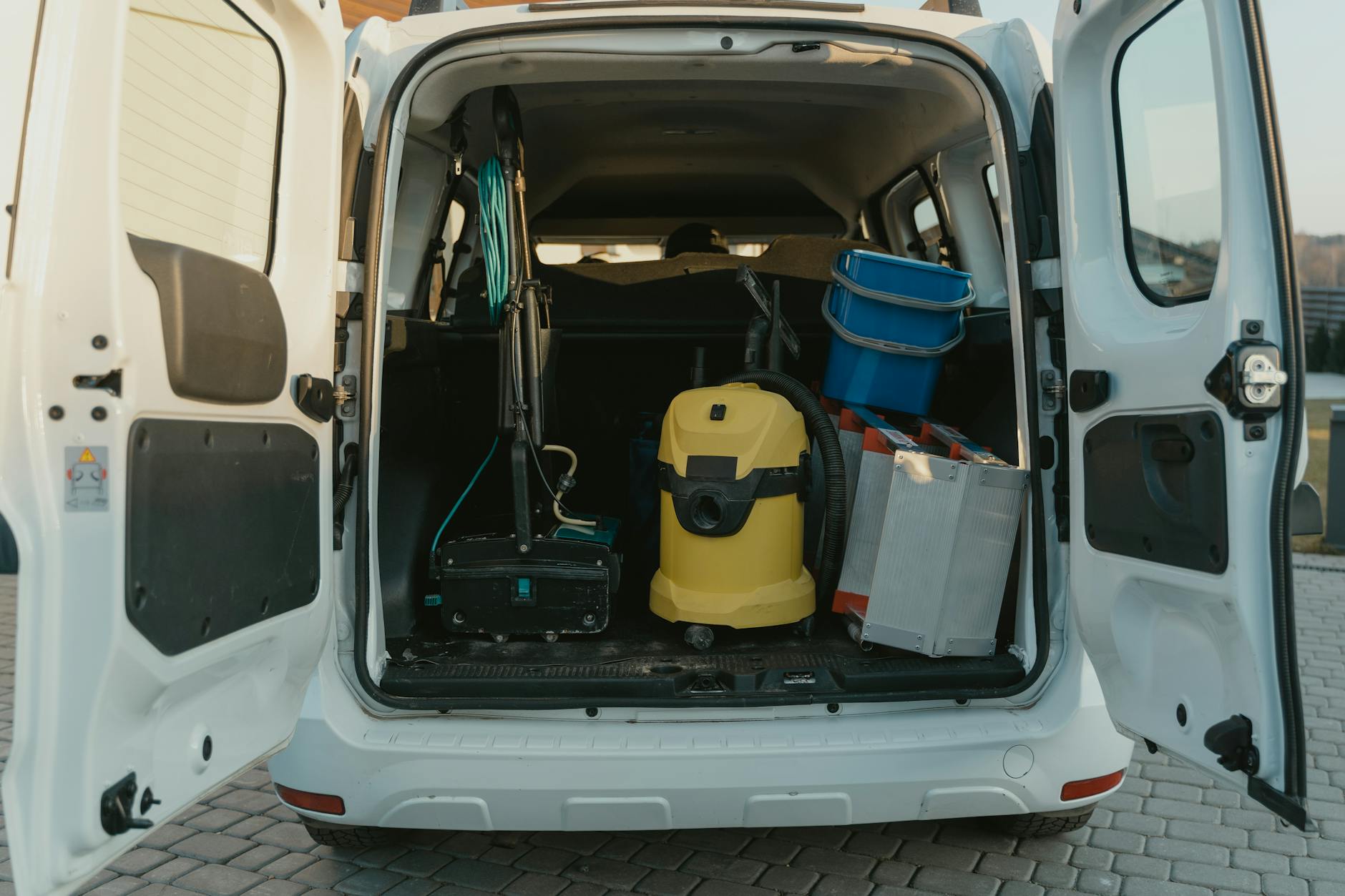
✅ Supplies and Equipment Checklist
Cleaning supplies create the initial tools needed to begin work. Supplies vary by specialty, but most businesses begin with reliable multipurpose cleaners and microfiber cloths.
Minimum Supplies
- All-purpose cleaner
- Bathroom-specific cleaner
- Floor mops and dusters
- Vacuum
As you grow, you can add specialty items like steamers or tile scrubbers. Increasing supply efficiency helps improve profit margins.
✅ Build a Pricing System
Pricing requires a predictable structure so you avoid guesswork. Most businesses begin using hourly rates, then transition to flat-rate pricing as they gain understanding of job durations.
With more experience, square-foot pricing becomes beneficial for commercial and recurring accounts. Choosing the right method impacts pricing accuracy.
✅ Understand Your Startup Costs
Cleaning businesses have low startup costs and grow quickly once recurring clients are established. Costs scale gradually as the business expands.
A basic range includes supplies, licensing fees, insurance, and advertising. Keeping startup costs lean increases early profitability.
Example Startup Cost Table
| Category | Typical Range |
|---|---|
| Business Licensing | $50–$300 |
| Supplies | $150–$600 |
| Insurance | $350–$900 annually |
| Website/Advertising | $100–$500 |
| Business Registration | $0–$500 (varies by state) |
Top Tips for a Strong (and Profiable) Start:
1. Schedule Initial Jobs Efficiently
Travel time is one of the biggest silent costs in cleaning. Grouping nearby homes or buildings dramatically improves time efficiency.
Route planning matters as much as quoting accuracy. Reducing travel time supports higher profit margins and increases your ability to take on additional clients sooner.
2. Build Simple Bookkeeping Habits Early
The sooner you begin tracking income and expenses, the easier taxes will be. Track income, supply costs, mileage, and advertising from the start.
Even basic spreadsheets help maintain financial clarity. This foundation supports later growth when you implement more advanced bookkeeping.
3. Develop Repeatable Cleaning Processes
Efficiency increases profitability while reducing stress. Many cleaners create checklists or standardized workflows for bathrooms, kitchens, and entryways.
Repeatable routines shorten job times and improve estimating accuracy. Faster and more predictable cleanings contribute directly to profitability.
4. Start With A Marketing Plan In Place
Most cleaners get initial clients through referrals, neighborhood groups, and small local advertising. Local trust matters more than large-scale promotion.
A simple website and Google Business Profile greatly improve visibility. Early, effective marketing that emphasizes reliability and consistency improves client retention.
5. Onboarding Clients Professionally
Client onboarding establishes expectations, builds trust, and reduces future misunderstandings. Clear communication on scope, supplies, and pricing leads to repeat bookings.
Onboarding also strengthens customer relationships. Predictable client expectations increase recurring revenue.
Cleaning Business Startup Checklist Summary
Use this summary to confirm you’re ready to launch:
| Startup Step | Estimated Time to Complete | Estimated Cost | Notes |
|---|---|---|---|
| Register business name | 1–3 days | $0–$100 | Required for legal operation; varies by state |
| Obtain licenses | 1–7 days | $50–$300 | City/county business license typically required |
| Open banking account | 30–60 minutes | Usually free | Keeps finances separate and organized |
| Build pricing system | 1–3 days | $0 | Must choose hourly/flat-rate/sq ft structure |
| Set up bookkeeping | 1–2 days | $0–$50 | Spreadsheet or basic tracking software works |
| Acquire startup supplies | 1–2 days | $150–$600 | Cleaning chemicals, cloths, vacuum, PPE |
| Market locally & onboard first clients | 1–3 weeks | $0–$500 | Referrals, Google Profile, small web presence |
Final Thoughts
Launching a cleaning business is highly achievable when the setup steps are performed in a structured order. With legal registration, predictable pricing, efficient scheduling, and clear financial tracking, the business becomes both manageable and profitable.
Whether you plan to operate part-time or scale into commercial work, this startup checklist creates a foundation for long-term success. Your daily routines, financial systems, and client relationships all contribute to a predictable and profitable cleaning business.
Leave a Reply to Cleaning Business Pricing Examples and Quoting Templates: Real Scenarios and How to Estimate Accurately – Small Business ManagerCancel reply