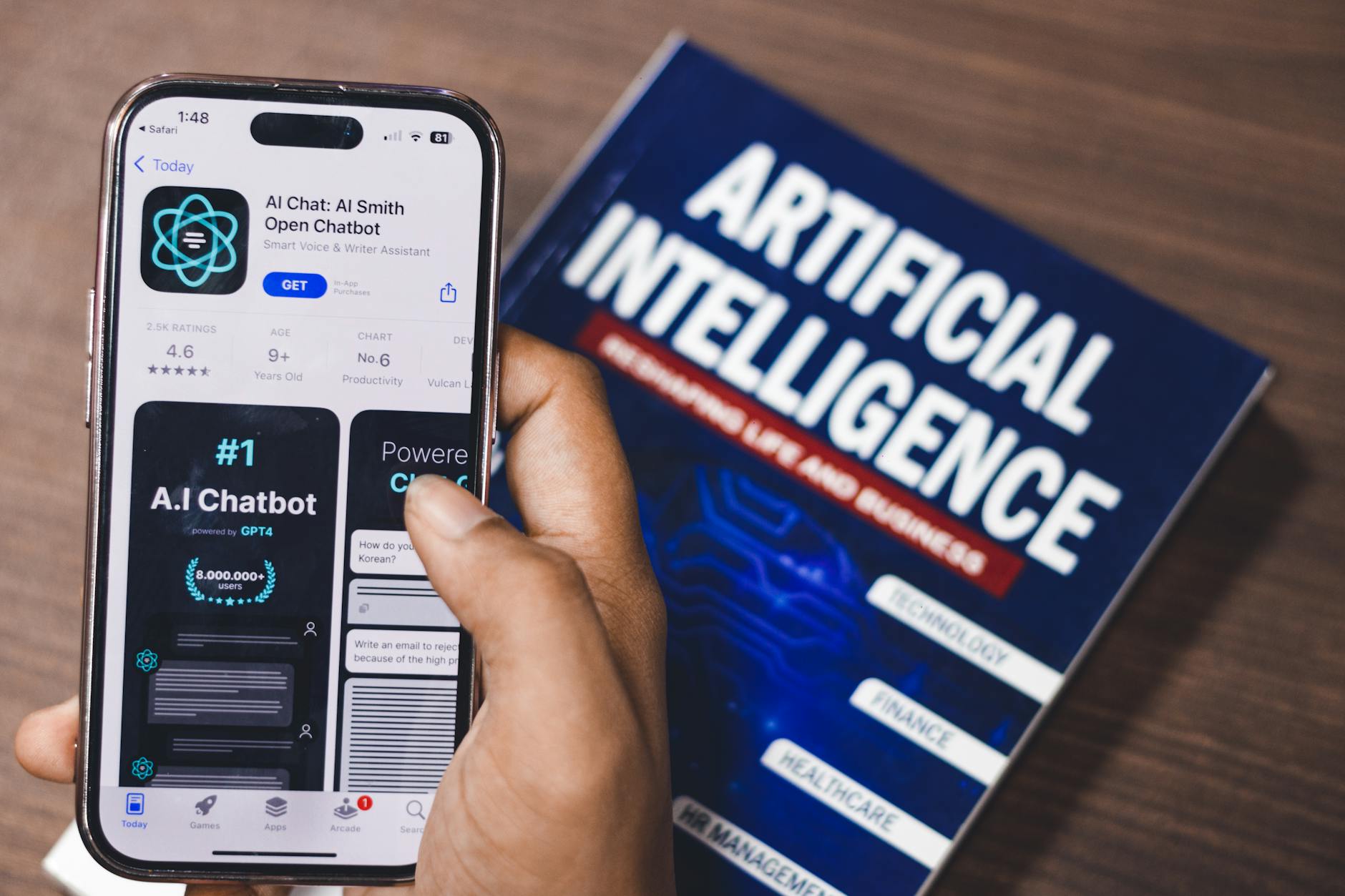
The future of small business growth is here—and it’s powered by Artificial Intelligence (AI). By 2025, AI adoption among SMBs is expected to surge by 300%, transforming everything from customer service to marketing automation.
For small business owners, AI isn’t just for tech giants—it’s an affordable, scalable tool that can boost sales, cut costs, and streamline operations. But how can you harness AI without breaking the bank?
In this guide, we’ll cover:
✅ Why AI is a game-changer for small businesses
✅ Top AI tools for marketing, sales, and operations
✅ How to implement AI without a tech team
✅ Real-world AI success stories from SMBs
Let’s unlock the power of AI for your business!
Why AI is the #1 Growth Hack for Small Businesses in 2025
1. AI Levels the Playing Field Against Big Corporations
Gone are the days when AI technology was only for Fortune 500 companies. Today, cloud-based AI tools are cheaper, faster, and easier to use than ever. Small businesses can now:
✔ Automate repetitive tasks (freeing up time for strategy)
✔ Personalize marketing at scale (like Amazon & Netflix)
✔ Predict customer behavior (and stay ahead of trends)
2. AI Drives Hyper-Personalized Customer Experiences
Customers expect personalized interactions—AI makes it possible. With tools like:
- Chatbots (24/7 customer support)
- AI-powered recommendations (boost upsells)
- Dynamic pricing engines (optimize profits)
You can deliver VIP experiences without hiring a huge team.
3. AI Cuts Costs & Boosts Efficiency
From automated invoicing to budgeting and inventory forecasting, AI reduces human error and operational waste. For example:
- Restaurants use AI to predict busy hours & optimize staffing.
- E-commerce stores leverage AI for fraud detection & demand planning.
7 AI Tools Every Small Business Should Use in 2025
1. AI-Powered Marketing Tools
🔹 ChatGPT & Jasper – Generate SEO-optimized content in minutes.
🔹 HubSpot AI – Automate email campaigns & lead scoring.
🔹 Canva Magic Write – Instantly create social media posts & ads.
2. AI Sales & CRM Boosters
🔹 Zoho CRM + AI – Predict high-value leads & prioritize outreach.
🔹 Gong.io – Analyze sales calls to improve conversions.
3. AI for Operations & Productivity
🔹 QuickBooks AI – Automate expense tracking & invoicing.
🔹 Forecast by Xero – AI-driven cash flow predictions.

How to Implement AI in Your Small Business (A Step-by-Step Blueprint)
Implementing AI in your small business doesn’t require a massive budget or tech team. By following this structured approach, you can start small, minimize risk, and scale intelligently. Here’s your complete roadmap:
Step 1: Identify Pain Points (Where AI Can Help Most)
Before investing in AI, diagnose where your business needs it most. Ask these key questions:
Key Areas to Audit:
- Time-Wasting Tasks
- Are employees spending hours on repetitive work (data entry, scheduling, email responses)?
- Example: A boutique spends 15 hours/week manually updating inventory—AI could automate this.
- Customer Experience Gaps
- Are leads falling through the cracks due to slow response times?
- Example: A roofing company misses 30% of inquiries because no one answers calls after hours—a chatbot could capture those leads.
- Revenue Leaks
- Are you losing sales due to poor personalization or pricing?
- Example: An online store sees high cart abandonment—AI-driven dynamic pricing or exit-intent chatbots could recover sales.
- Data Blind Spots
- Are you making decisions based on guesswork instead of data?
- Example: A café orders too much perishable stock—AI demand forecasting could optimize inventory.
Pro Tip: Survey employees—they often know the biggest inefficiencies!
Step 2: Start Small (Low-Cost, High-Impact AI Experiments)
Avoid “boil the ocean” projects. Instead, run focused pilots in high-ROI areas:
Quick Wins to Test:
- AI Chatbots for Customer Service
- Tools: ManyChat (Facebook/Instagram), Drift (website)
- Use Case: Automate FAQs (e.g., “What are your hours?”) and collect lead info 24/7.
- AI Content Creation
- Tools: Copy.ai (ad copy), Writesonic (blog posts), Canva Magic Write (social media)
- Use Case: A florist uses AI to generate 50 Valentine’s Day ad variants in 10 minutes.
- AI-Powered Email Marketing
- Tools: HubSpot AI, Mailchimp’s Predictive Analytics
- Use Case: Segment customers automatically and send hyper-personalized offers.
- AI Accounting & Invoicing
- Tools: QuickBooks AI, Zoho Expense
- Use Case: Auto-categorize expenses and flag tax deductions.
Budget Tip: Many tools offer free trials or freemium plans (e.g., ChatGPT’s free tier).
Step 3: Measure & Scale (Prove ROI Before Expanding)
Track 3 key metrics to determine if your AI experiment succeeds:
What to Measure:
- Time Saved
- Example: If AI cuts 8 hours/week of admin work, that’s **1,200/monthsaved∗∗(at1,200/monthsaved∗∗(at15/hr).
- Revenue Impact
- Example: An AI chatbot captures 20 extra leads/month, converting 5 into $2,000 sales.
- Customer Satisfaction
- Survey customers: “How would you rate our response time now vs. before AI?”
Scaling Up:
- Double down on what works: If chatbots drive leads, add them to WhatsApp/SMS.
- Phase out manual processes: Replace spreadsheet forecasting with AI-powered tools like Pulse.
- Train employees: Teach staff to use AI (e.g., prompt engineering for ChatGPT).
Red Flag: If an AI tool isn’t delivering ROI in 3 months, pivot or try alternatives.
Real-World Example: How a Cleaning Service Scaled with AI
Problem: The owner spent 4 hours/day scheduling jobs and answering calls.
AI Solution:
- Implemented Calendly AI for automated booking.
- Added a ManyChat chatbot to handle FAQs.
- Result:
- Saved 20+ hours/week
- Grew bookings by 35% with 24/7 availability
Key Takeaway: Think “Crawl, Walk, Run”
- Crawl: Fix one pain point (e.g., automate invoicing).
- Walk: Expand to marketing/sales (e.g., AI ads).
- Run: Integrate AI across operations (e.g., predictive inventory).
By following this approach, you’ll minimize risk, maximize ROI, and future-proof your business for 2025 and beyond.
Ready to start? Pick one AI tool this week and test it!
AI = Your Competitive Edge
AI isn’t the future—it’s happening now. Small businesses that adopt AI early will:
🚀 Outmaneuver competitors
💰 Boost profits with automation
📈 Scale faster with data-driven decisions
Start small, think big, and let AI fuel your growth in 2025!
Leave a Reply